A Cherry Creek guide to condo water damage
Condo and Home Water Damage Restoration in Cherry Creek
Water extraction, structural drying, and repairs for Cherry Creek condominiums, townhomes, and houses, including the leaks that start in someone else's unit.
Before you hire anyone, ask whether the technicians hold IICRC certification for water damage work, and ask to see proof of insurance.
When water gets into a multi-unit building, it rarely stays in one place
-
The source is often somewhere else
A lot of Cherry Creek water damage doesn't begin in the space where it's found. A failed dishwasher hose, a cracked toilet supply line, or an overflowing tub on an upper floor can travel through ceiling cavities, along plumbing chases, and down shared walls before it shows up as a stain or a drip in the unit below.
-
Damage spreads before it shows
By the time it's visible, drywall, insulation, and subfloor in more than one home may already be wet.
-
Drying and coordination go together
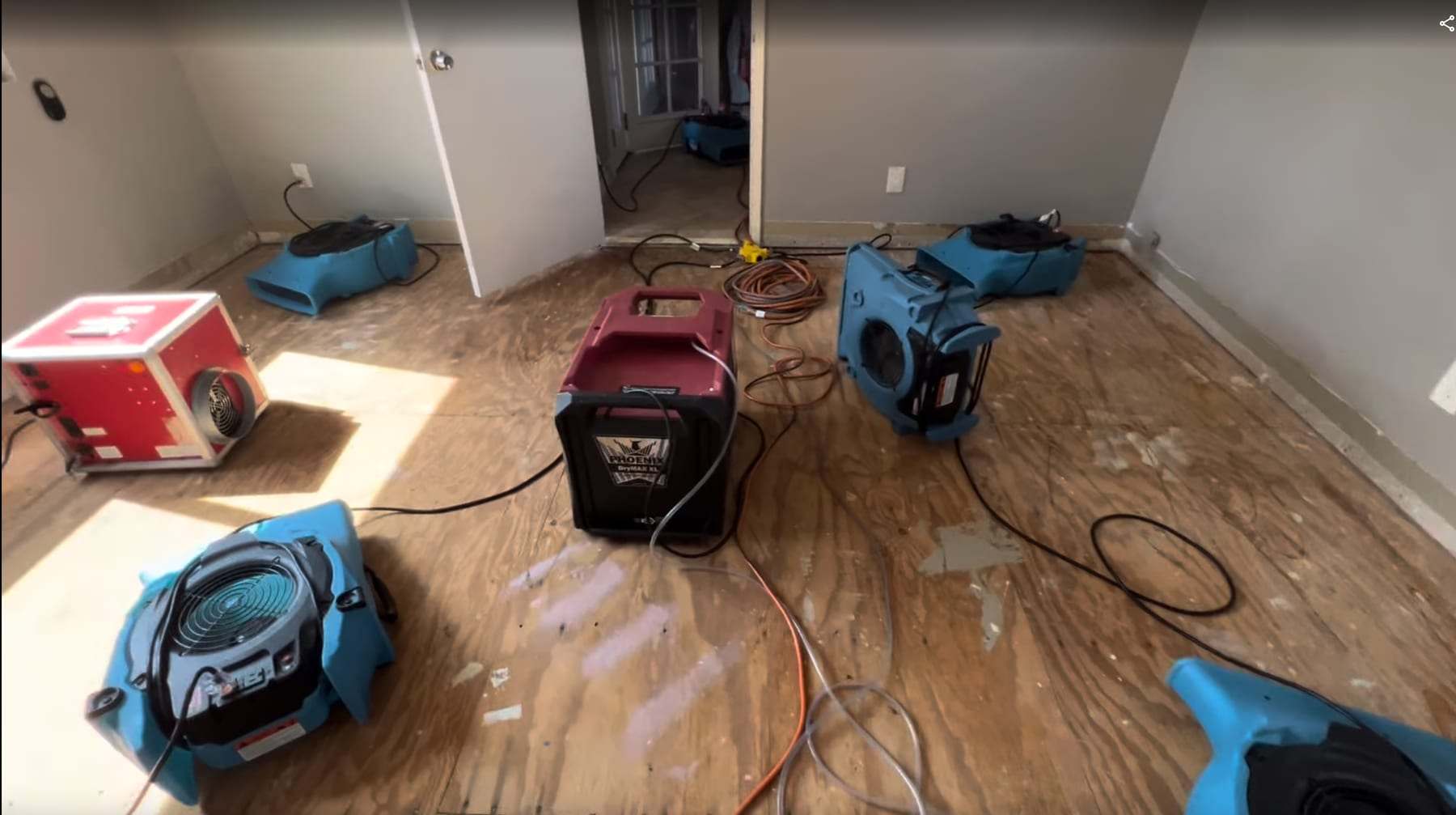
Restoration in these buildings is part drying and part coordination. A careful restoration crew locates the source with the building's maintenance staff, extracts standing water, opens or ventilates cavities where moisture is trapped, and sets up drying equipment, then records readings each day so the owners, the association, and the insurance carriers involved are working from the same information.
Go deeper on leaks in shared buildings
Explainers and planning tools for condo owners, townhome owners and the people who manage their buildings.
- Explainers
Each explainer takes one problem that shows up in Cherry Creek's towers, townhomes, pre-war houses and storefronts, such as a fan coil overflowing behind a closet wall or a radiator valve failing in a Country Club foursquare, and covers how it happens, what to check, who is usually responsible, and what to ask before anything gets torn out..
- Planning tools
These planning tools are meant to be printed or kept open on a phone while a loss is underway: an incident log for leaks that cross unit lines, questions for the association manager and for a restoration company, a glossary of insurance terms, cost factors, a seasonal calendar and two decision guides..
- Situations
Every situation here is invented for illustration.
- Places
The neighborhoods around Cherry Creek were built in very different eras, from Country Club mansions with boilers and plaster to Belcaro's postwar brick ranches and Glendale's apartment blocks.
Signs that water has spread past what you can see
Surface water is easy to spot. These clues suggest it has reached materials that need professional drying:
-
Ceiling stains, bubbling paint, or sagging drywall below a bathroom, kitchen, or laundry area upstairs.
-
Baseboards pulling away from the wall, or a wall that feels cool and soft compared with the rest of the room.
-
Hardwood boards cupping or engineered flooring lifting at the seams near the leak.
-
A musty smell inside cabinets or closets that share a wall with a bathroom or water heater.
-
Water reappearing after you've mopped, which usually means an active or trapped source.
In the first hour
-
1
Shut off the fixture or the unit's water valve if you can reach it safely, and alert building staff so they can check the floors above.
-
2
Turn off power to affected rooms at the breaker if water is near outlets or light fixtures.
-
3
Photograph damage before moving anything. These photos help both your claim and the association's.
-
4
Move rugs, electronics, and furniture off wet floors; put foil or blocks under furniture legs that can't move.
-
5
Call your insurer, then a restoration company you have checked. Extraction and drying are time-sensitive.
From the first call to a dry, repaired unit
The goal is to dry the building's structure to normal levels, not just to make the surfaces look dry. Here is the typical sequence for a Cherry Creek condo or home:
-
Source and safety check
Confirm the leak is stopped, identify where water traveled, and check for electrical hazards and contamination.
-
Extraction
Remove standing water from carpet, hard floors, and cavities with portable or truck-mounted extraction equipment.
-
Controlled demolition
Remove only what can't be dried in place, such as saturated insulation or carpet pad, and document every cut.
-
Structural drying
Air movers and dehumidifiers run while technicians record moisture readings daily until materials reach drying goals.
-
Repairs and handoff
Rebuild drywall, trim, and flooring, then walk through the finished work with you and the building contact.
For property managers and HOA boards
Most of the delay in a multi-unit water loss is access, not equipment. These five things let crews work through every affected unit the same day:
- Authorize entry to the source unit, plus units above and below and any common areas
- Locate the riser or unit shutoff; a building main shutoff affects every resident
- Tell affected residents when crews will be there and how long equipment will run
- Name one contact for scheduling and approvals so nothing waits on email
- Ask for documentation organized by unit so each insurer sees only its part
Common water losses in Cherry Creek
| Situation | What it usually involves |
|---|---|
| A leak from the unit above | A condo owner comes home to a stained, dripping ceiling. Water from a failed supply line upstairs has run through the ceiling cavity and down one wall, and both units need drying. |
| Dishwasher or ice-maker line under hardwood | A slow leak under a kitchen island goes unnoticed for days until boards begin to cup. Moisture mapping shows how far it spread beneath the flooring. |
| Water heater failure in a townhome | A tank in a utility closet lets go overnight, soaking carpet in two adjoining rooms and the finished space below. |
| Unoccupied unit discovered by a neighbor | An owner traveling for the winter gets a call from building staff about water in the hallway, and needs someone who can coordinate access and drying remotely. |
In a condo, more than one insurance policy may be involved
Who pays depends on where the water came from and on your association's declarations and bylaws. The restoration company doesn't decide that, and neither does this website. What a restoration company can do is document the damage so each party can sort it out.
Unit owner
Usually responsible for the interior of the unit (walls-in coverage, often called HO-6) and the owner's own belongings and upgrades.
Association (HOA)
The master policy usually covers the building structure and common elements. What counts as 'common' is defined in the declarations, not by the restoration company.
The neighbor whose unit leaked
May be responsible if the leak came from something they own or maintain, such as a supply line, appliance or tub.
Tenants
Renter's insurance covers a tenant's belongings, not the building or the unit's finishes.
Ask any restoration company for an itemized estimate (many carriers use Xactimate) with photos and moisture readings. Coverage decisions belong to the insurers.
Water damage in Cherry Creek's condos, townhomes, and older houses
Cherry Creek has changed quickly. Alongside long-standing single-family streets, much of the housing near the shopping district is now mid- and high-rise condominiums, and many older houses in Cherry Creek North have been replaced by newer duplexes and townhomes. That mix means a water loss here often involves a homeowners association, a building manager, and more than one insurance policy.
Associations usually carry a master policy for common elements, while unit owners carry their own coverage for the interior. Which policy responds depends on the association's governing documents and the source of the leak. A restoration company can't decide coverage, but it should provide the moisture readings, photos, and itemized estimate (many carriers use Xactimate) that adjusters and managers ask for.
Describe what's leaking
This form is not connected. This website is a draft preview: no business has been confirmed to receive requests, so the fields below are switched off and nothing can be sent. In an emergency, call 911.
Cherry Creek water damage questions
Who pays when water comes from the condo above mine?
It depends on your association's governing documents, the cause of the leak, and the policies involved, which may include the association's master policy, the upstairs owner's policy, and your own HO-6 policy. Report the loss to your association and your insurer promptly. A restoration company can document the damage in a format adjusters use, but it doesn't make coverage decisions.
Can wet drywall be dried in place, or does it have to be replaced?
Drywall soaked with clean water can often be dried in place if drying starts quickly and the material hasn't lost strength. Drywall that is sagging, crumbling, or wet from contaminated water is typically removed. Moisture readings, not appearance, determine which applies.
How do you know the walls are actually dry?
Technicians use moisture meters and thermal imaging to compare affected materials with unaffected ones in the same building, record readings daily, and stop drying only when materials reach those reference levels.
How long does structural drying usually take?
Many clean-water losses dry in about three to five days, but timing depends on how long the water sat, the materials involved, and airflow in the space. Hardwood and multi-layer floors usually take longer.
Do I need to be home while equipment runs?
Not usually. The equipment runs continuously, and technicians return to take readings and adjust it. Someone needs to provide access for those visits, which building staff can sometimes arrange.
Will the drying equipment trip breakers in my unit?
Air movers and dehumidifiers draw significant power. Technicians plan circuit loads when placing equipment and will ask about your electrical panel, especially in older or smaller units.
Can the drying company also handle the repairs?
Some restoration companies do reconstruction as well as mitigation and can rebuild drywall, paint, and replace flooring once the structure is dry. Others hand off to a contractor. Ask which applies, and get the repair scope in writing separately from the drying.
The leak came from the unit above me, but nobody is home. What can I do?
Call the property manager or HOA immediately; they can usually authorize emergency entry. Meanwhile, protect your belongings, take photos and call a restoration company you have checked for your own unit so extraction and drying can start below while access to the source is arranged.
Questions to ask about surprise costs and unnecessary demolition