Height changes how water arrives
Upper floors in a tower face stronger wind than a single-family house. During a Front Range thunderstorm, rain can hit windows nearly horizontally, and on balconies, snow drifts against sliding doors and then melts in the afternoon sun. Window systems are built with drainage paths, called weep holes, that let water that enters the frame drain back outside. When those weeps clog with dust or debris, or when sealant joints between the window and the wall age and crack, water ends up inside.
Sliding doors are a frequent trouble spot. Their bottom track holds water by design and relies on weeps to empty it. Balcony surfaces that slope toward the building, or that have been covered with outdoor tile or turf that blocks drainage, can send water under the threshold during heavy rain or snowmelt.
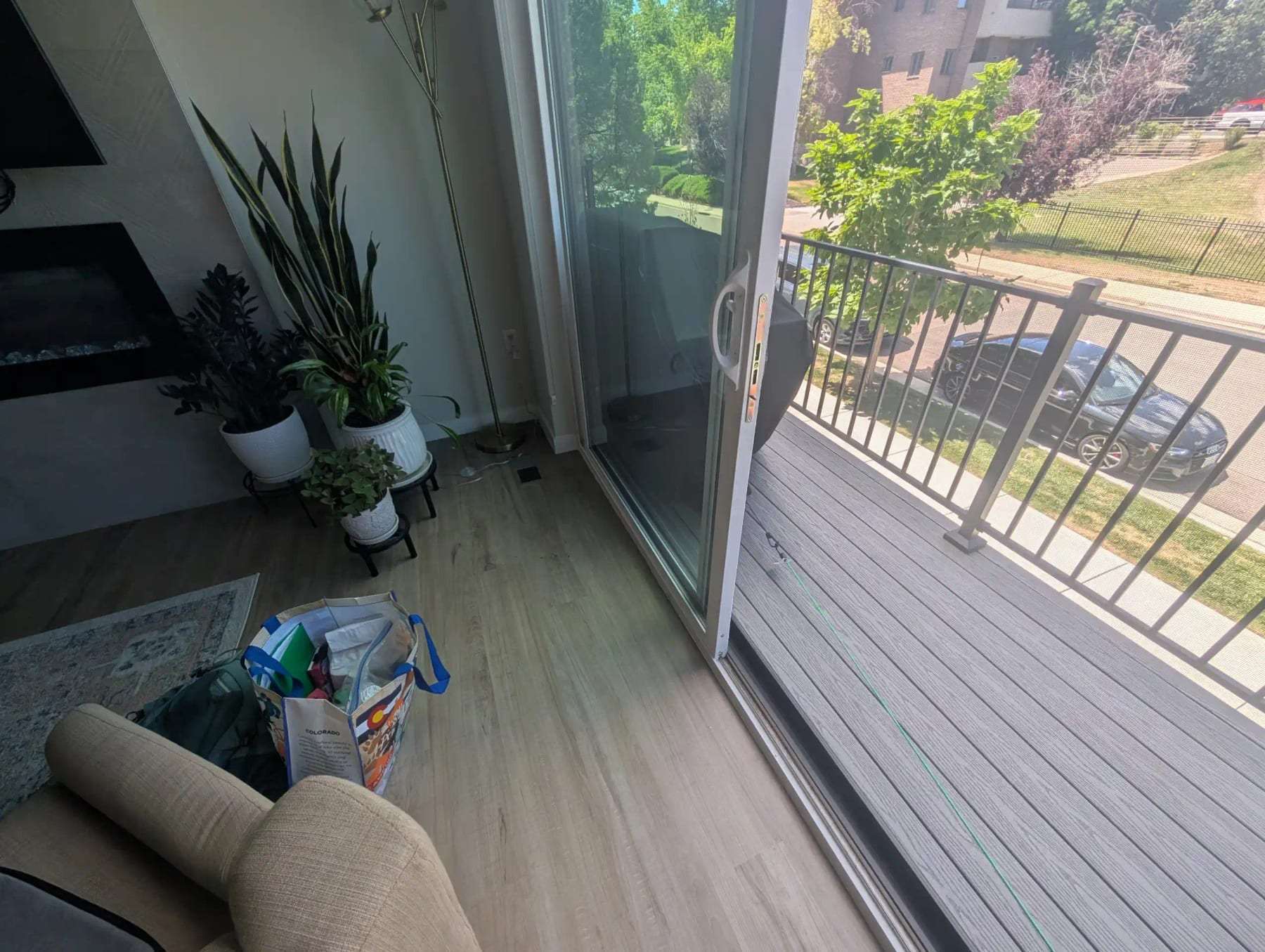
Apartment living room with a sliding door to a balcony. Illustrative only: this photo is not from a job tied to this site or a specific address.
Symptoms and where they point
| Symptom | Possible source | Who usually addresses it |
|---|---|---|
| Damp carpet at the slider after storms | Clogged slider track weeps or a threshold seal | Owner for cleaning; association for exterior seals in many buildings |
| Water on the sill only on windy days | Failed sealant or gasket on the windward side | Often the association, depending on the declarations |
| Swollen baseboard under a window | Water running down inside the wall from the window or above | Association for the building envelope; owner for interior finishes in many cases |
| Fog between glass panes | Failed insulated glass seal, not a leak into the unit | Depends on whether windows are owner or common elements |
| Stain on the ceiling near the exterior wall | Balcony or window above draining inward | Association, with access to the unit above |
What to do when you see water at a window or door
Record the conditions
Note the date, wind direction if you can tell, and whether it was rain, hail or melting snow.
Clean what you are allowed to
Clear leaves and grit from the slider track and the visible weep openings, if building rules allow owners to do that.
Report it to the manager
Send photos and dates. Exterior seals and envelope repairs often require a contractor hired by the association, sometimes working from a lift or swing stage.
Have the wall checked
Ask for moisture readings in the drywall and floor next to the window. Repeated small leaks can wet the wall cavity without much visible water.
Interior repairs: now or later?
- IfThe exterior leak has not been fixed yetThenDry the interior, but hold off on finished repairs. New drywall or flooring will be damaged again.
- IfReadings show only a small wet area that dries quicklyThenCosmetic repairs can often wait until the next scheduled envelope work.
- IfThe leak recurs every storm and the wall stays wetThenPress for a water test of the window or door, and ask about mold inspection if odor develops.
General information for Cherry Creek, not a quote or professional advice. In an emergency, call 911.