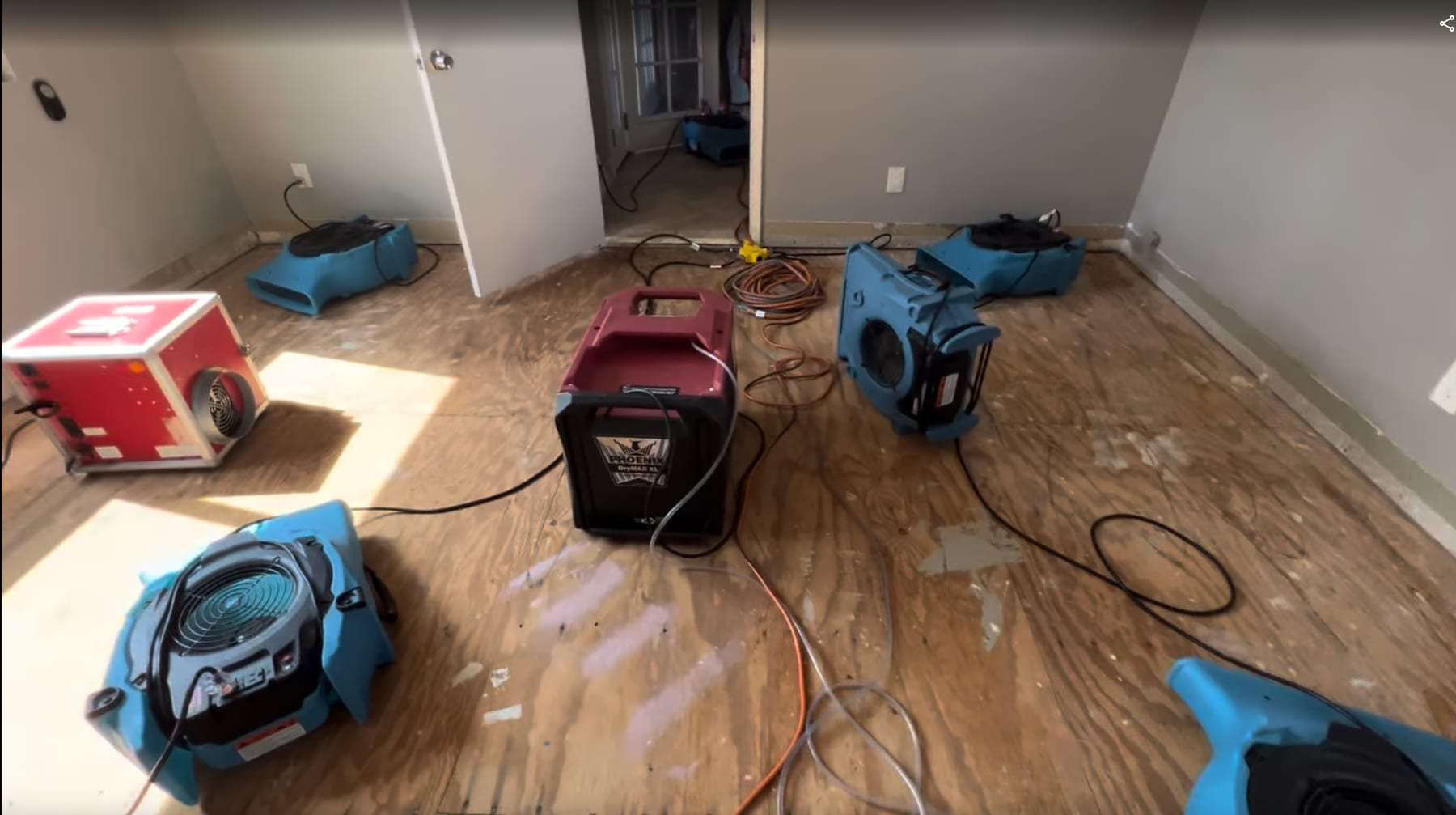
Bedroom with the flooring removed and the subfloor drying under air movers. Used to illustrate this step; it is not a photo of a job connected to this site.
Why modern roofs leak in their own way
A pitched roof sheds water by gravity. A low-slope or flat roof relies on a continuous membrane, carefully sloped insulation, and drains or scuppers that must stay clear. Add a rooftop deck and you add pedestals or sleepers, railing posts, a stair or hatch penetration, and often a hose bib or gas line for a grill. Every one of those is a place where the membrane is interrupted or flashed.
Denver weather is hard on these details. Strong sun and big temperature swings make materials expand and contract daily. Hail can bruise membranes. Snow piles up against parapets and around the deck, then melts during sunny afternoons and refreezes at night, which can push water into seams and back up behind clogged drains. A leak may appear only during heavy rain, only during snowmelt, or only when wind drives water sideways.
Where these leaks usually start
- Roof drains and scuppers
- Leaves, roofing debris and ice can block them, ponding water until it finds a seam.
- Parapet caps and walls
- Gaps in metal caps or cracked stucco let water into the top of the wall, where it runs down inside.
- Deck penetrations
- Railing posts, pedestal bases, light fixtures and utility lines through the membrane.
- Roof hatch or stair penthouse
- The door threshold and the curb around the hatch are frequent trouble spots.
- Balcony and window heads below
- Water entering higher up can exit at the top of a window or slider on the floor below.
When a top-floor ceiling starts staining
Note the weather
Write down when the stain or drip appears: during rain, during snowmelt, on windy days. That pattern helps narrow the source.
Check drains safely
If the deck is safe to walk on and not icy, look for standing water or clogged drains. Do not go onto a roof without a safe, designed access.
Protect the interior
Catch drips, move belongings, and turn off any light fixture that is wet.
Call a roofer familiar with low-slope systems
Flat roofs need someone who works on the specific membrane type. Ask about leak testing rather than just patching the visible spot.
Dry the interior separately
Insulation and drywall under a leaking roof can stay wet long after the roof is repaired. Ask for moisture readings in the ceiling cavity.
Questions for the builder, roofer or association
- Who installed the roof membrane, and is there documentation of the system and its installer?
- In a duplex or townhome association, is the roof a common element or each owner's responsibility?
- Can a water test be performed to find the entry point rather than guessing?
- Were the deck pedestals and railing posts installed through the membrane or on top of it?
- How will interior damage be documented for insurance while the roof issue is being resolved?
General information for Cherry Creek, not a quote or professional advice. In an emergency, call 911.