A neighborhood of older, larger homes
Country Club sits just west of Cherry Creek, near the Denver Country Club golf course. Much of it was built in the early 1900s through the 1930s, with substantial brick and stucco homes in revival styles on wide, tree-lined streets. Many have been carefully renovated, but they often keep original features: plaster on lath, hardwood floors, boiler heat with radiators, and clay or cast iron drain lines.
Those features shape water damage in specific ways. Plaster holds moisture longer than drywall and can lose its grip on lath. Radiator systems spread dozens of small leak points through finished rooms. Old sewer laterals can be invaded by roots from the mature trees that give the neighborhood its character. And finishes such as quarter-sawn oak, original millwork, and leaded glass may be difficult to match if they are damaged.
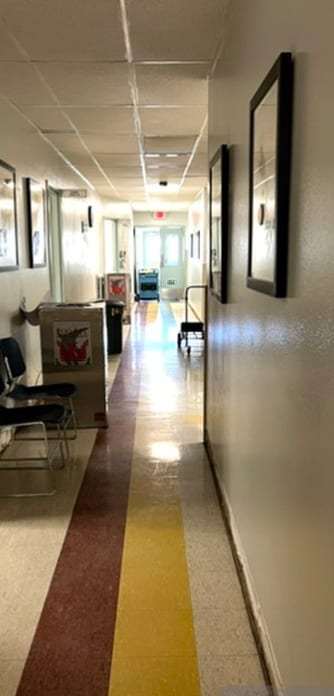
Office corridor with a dehumidifier drying the carpet. Illustrative image of the process; it does not document a job done for this site.
What to know before a loss
- Historic districts
- Parts of Country Club are designated historic districts. Exterior changes, such as window replacements or masonry repairs after water damage, may need review by Denver Landmark Preservation.
- Heating
- Many homes still use boilers. Fall startup and deep cold snaps are the riskiest times for radiator and pipe leaks.
- Hazardous materials
- Homes of this age may have lead paint and asbestos in pipe wrap, plaster or flooring. Test before demolition.
- Basements
- Many have been finished, sometimes with original foundation walls behind new drywall, which can hide seepage.
- Sewer laterals
- Original laterals may be clay. A camera inspection is a sensible step after any backup.
Preparation for Country Club homeowners
General information for Cherry Creek, not a quote or professional advice. In an emergency, call 911.